Practical pathways for sustainable crop residue management in Indonesia highlighted at CSAM Multistakeholder Dialogue
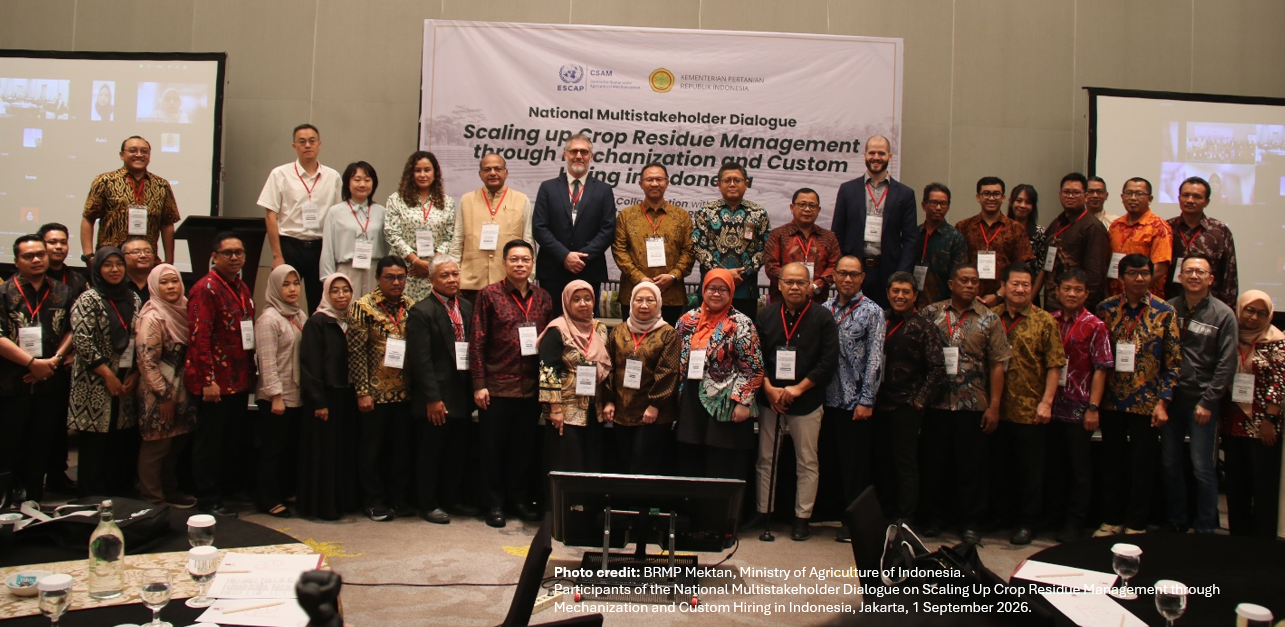
On 1 September 2026, CSAM, together with the Indonesian Center for Agricultural Development and Modernization of Mechanization (ICADM Mechanization / BRMP Mektan), organized a National Multistakeholder Dialogue on Scaling Up Crop Residue Management through Mechanization and Custom Hiring in Jakarta.
The dialogue brought together more than 100 participants, both in person and online, from government agencies, research institutions, farmer groups, machinery service providers, academia, the private sector and development partners to discuss how mechanization, financing and policy support can help scale up sustainable crop residue management in Indonesia.
The dialogue opened with a keynote address by Dr. Desrial, Advisor to the Minister of Agriculture of the Republic of Indonesia, who highlighted the importance of climate-smart mechanization and location-specific approaches to crop residue management. He also proposed the development of a platform for sharing data, knowledge, technologies and good practices across the region, underscoring the value of regional cooperation in advancing sustainable agricultural mechanization. The programme combined expert presentations, panel discussions and interactive breakout sessions. The first session focused on regional experiences, innovations and lessons learned in crop residue management, including an overview of the ASEAN Guidelines on Crop Residue Burning and perspectives from the private sector, while a second panel discussion explored policy support, financing opportunities and mechanization models for scaling up sustainable crop residue management in Indonesia.
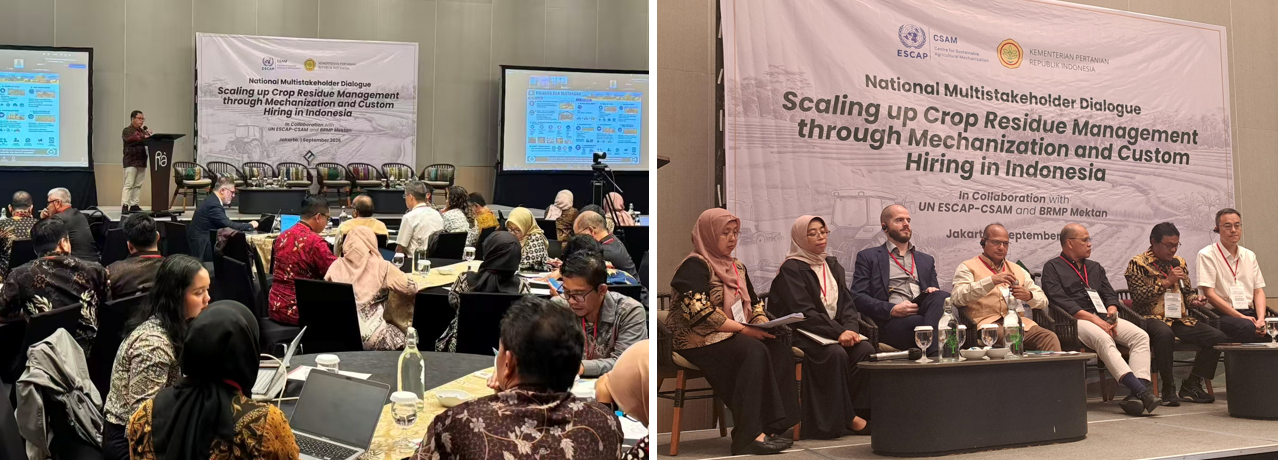
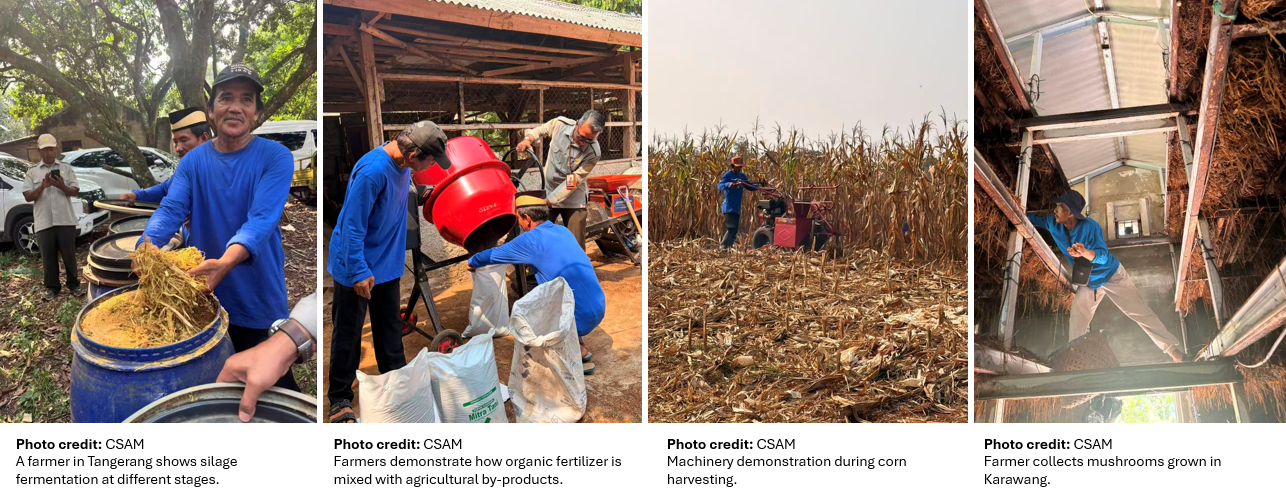
One of the key messages emerging from the dialogue was the important role of mechanization in giving farmers practical options for managing crop residue. For these solutions to be taken up more widely, machinery needs to be affordable, available when farmers need it, and suited to local conditions. Participants also highlighted the environmental benefits of reducing burning, while noting the potential to put crop residue to productive use as compost, livestock feed and mushroom substrate.
A dedicated breakout session enabled participants to discuss in depth policy, technology and financing aspects of crop residue management and custom hiring. Drawing on their diverse experiences, stakeholders identified practical challenges, shared lessons learned and proposed recommendations to help create an enabling environment for scaling up sustainable crop residue management solutions across Indonesia. Recommendations emerging from the three breakout groups underscored the importance of developing an enabling ecosystem for sustainable crop residue management. Participants highlighted the need for clearer policy frameworks and implementation mechanisms, greater investment in mechanization and custom hiring services, stronger market linkages for crop residue-based products, and location-specific approaches that reflect local farming conditions and opportunities.
Field visits to project sites
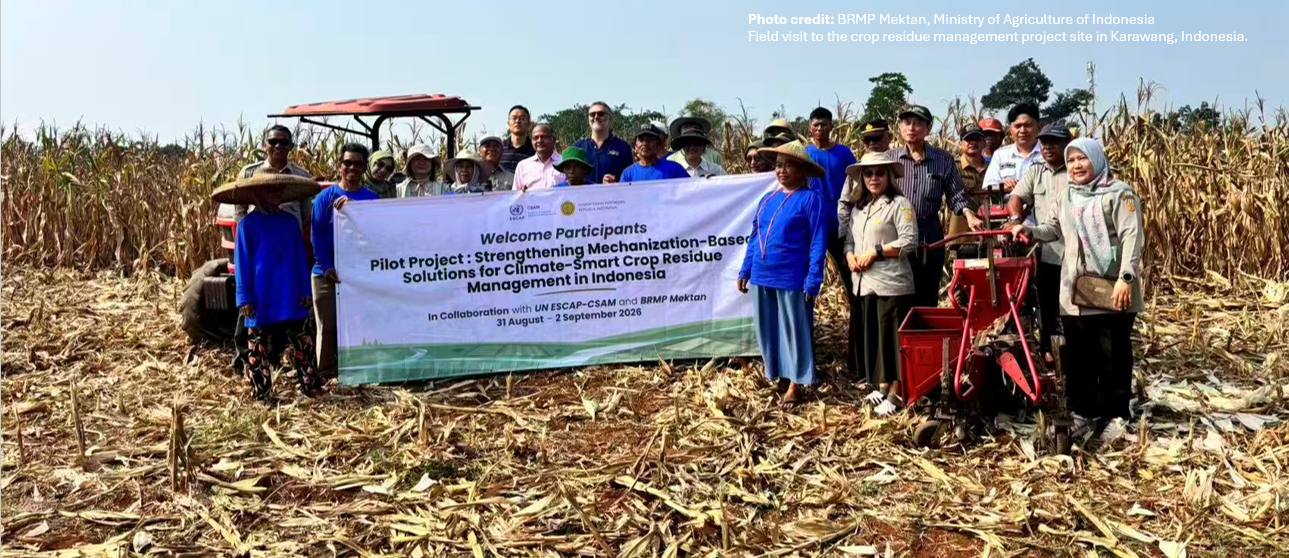
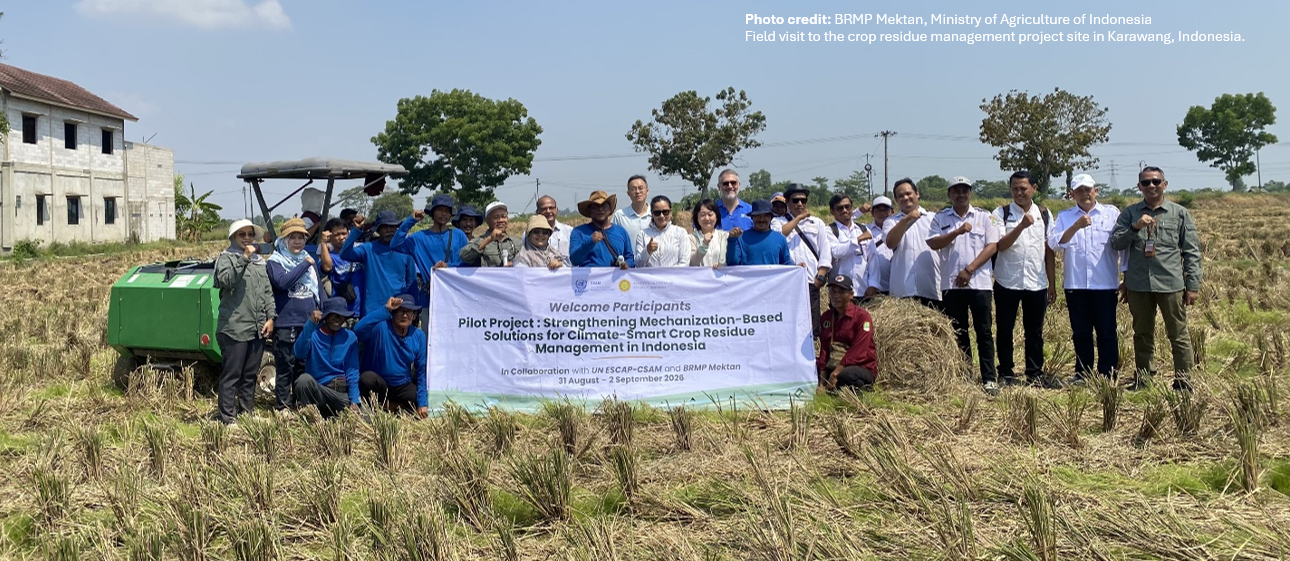
On 30 August and 2 September the CSAM team, including regional experts, also visited the project’s pilot sites in Tangerang and Karawang to see how crop residue management activities were implemented on the ground. The visits provided an opportunity to observe the machinery and practices being used and to speak directly with farmers and local stakeholders. These conversations pointed to practical factors that could influence adoption, including cost, access to machinery, timing, service availability and whether crop residue management can generate economic benefits for farmers.
The dialogue and the field visits highlighted how mechanization can support the shift from crop residue burning towards more productive, efficient and sustainable uses of agricultural residue in Indonesia.