
CSAM Supports Efforts on Climate Resilience and Green Transition in the Asia-Pacific Region
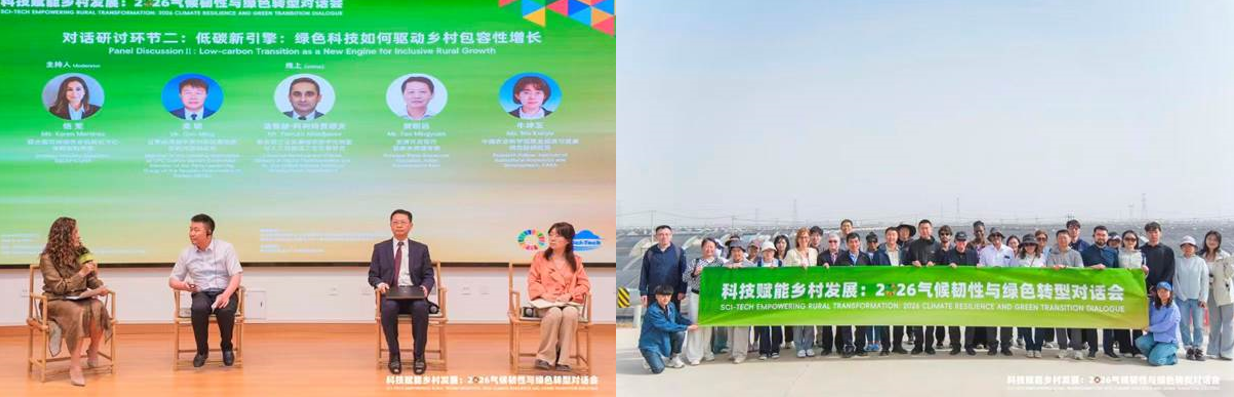
From 4 to 6 June 2026, the Centre for Sustainable Agricultural Mechanization of the United Nations Economic and Social Commission for Asia and the Pacific (ESCAP-CSAM), together with the China Internet Information Center and the China offices of the United Nations Food and Agriculture Organization, the International Fund for Agricultural Development and the United Nations Development Programme, co-organized an event titled 2026 Climate Resilience and Green Transition in Jinta County, Gansu, China, under the “Sci-Tech Empowering Rural Transformation” initiative which was launched in 2022.
The three-day event brought together around 100 participants from eight countries and eight international organizations, alongside representatives from government agencies, research institutions, civil society and the private sector, who participated both in person and online. A key component of the programme was the “Climate Resilience and Green Transformation Dialogue” held on 5 June. Discussions highlighted the critical role of technology and innovation in strengthening climate resilience, advancing sustainable agricultural development, and driving rural transformation. Participants highlighted practical experiences and best practices in sustainable land management, green transformation and the application of innovative and resource-efficient technologies to address climate and environmental challenges in vulnerable rural communities. Participants also emphasized the importance of enhanced cooperation, knowledge sharing and locally adapted solutions in fostering sustainable and inclusive rural development.
As part of the programme, participants visited ecological restoration sites, including the Ant Forest project and the Gobi Desert Agricultural Industrial Demonstration Park in Gansu province. The visits provided participants with opportunities to examine how sustainable land management, technological innovation and community engagement can contribute to land restoration, enhance resource-efficient agricultural production and create sustainable livelihood opportunities for local communities. It also provided insights into the application of agricultural technologies and production systems in challenging environments, demonstrating their potential to support rural economic development, strengthen resilience and promote environmental sustainability.
Overall, the event stressed the importance of integrated approaches linking climate adaptation, low-carbon development, sustainable agricultural mechanization and rural inclusion to support of climate-resilient and inclusive rural transformation.