
CSAM Convenes Regional Platforms for Strengthening Mechanization-based Solutions for Climate-smart Crop Residue Management
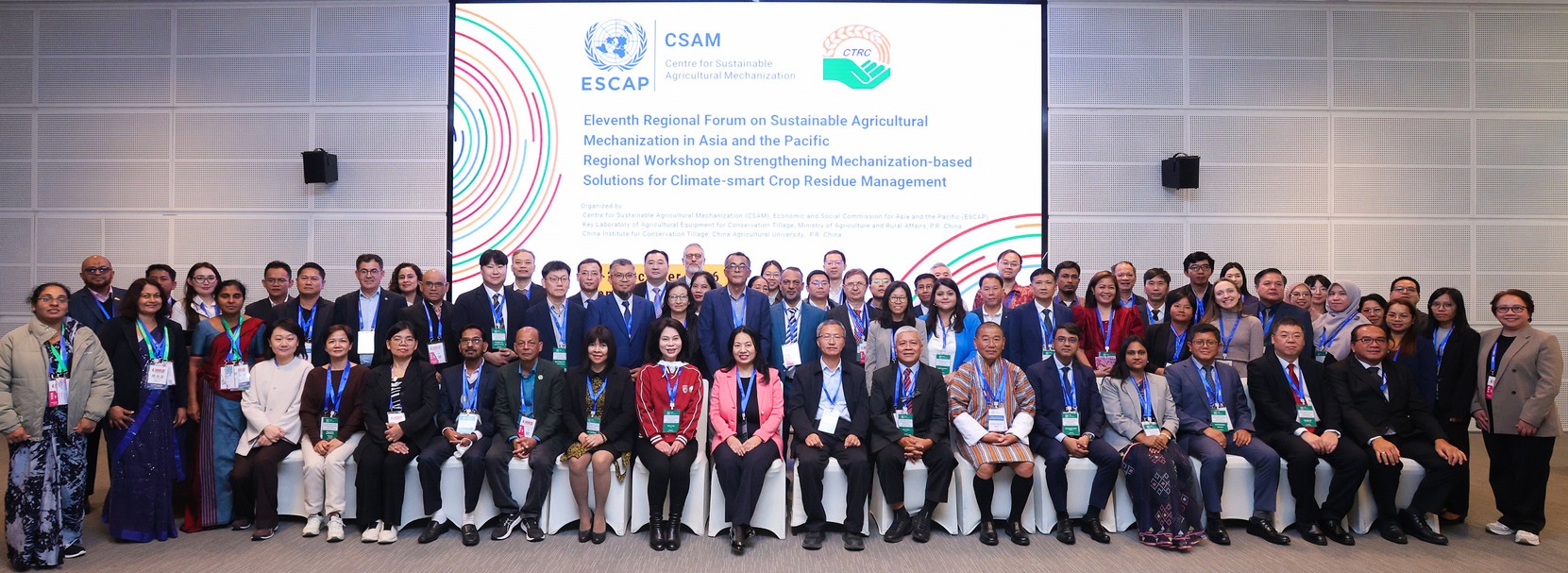
From 26 to 28 October in Tianjin, China, the Centre for Sustainable Agricultural Mechanization (CSAM) of the United Nations Economic and Social Commission for Asia and the Pacific (ESCAP), together with the College of Engineering of China Agricultural University and with the support of the Chinese Agricultural Machinery Distributors Association (CAMDA), held a “Regional Workshop on Strengthening Mechanization-based Solutions for Climate-smart Crop Residue Management” under the substantive theme of “Climate-smart Agricultural Mechanization for Sustainable Crop Residue Management and Resilient Agrifood Systems.” Convened as the eleventh edition of the Regional Forum on Sustainable Agricultural Mechanization in Asia and the Pacific, the event brought together approximately 100 participants from 20 countries, including policymakers, researchers, farmers' organizations, development partners and private-sector representatives, to discuss practical solutions to interconnected challenges related to climate change, air pollution, soil degradation, labour shortages and rural livelihoods.
The event was organized as part of the United Nations Peace and Development Fund (UNPDF)-funded project titled “Strengthening Mechanization-based Solutions for Climate-smart Crop Residue Management in Cambodia, Indonesia and Nepal” providing an opportunity for a mid-project exchange among project partners and participating countries’ stakeholders to review progress, exchange lessons learned and discuss pathways for scaling up successful approaches, also thanks to the large number of participants and best practices from the region. Representatives from Cambodia, Indonesia, Nepal, Lao PDR and Thailand highlighted experiences in the pilot sites established in collaboration with CSAM for machinery adaptation, field demonstrations, capacity-building, stakeholder engagement and the development of locally appropriate business models for sustainable crop residue management. Impact and evidence of behavioral change were also discussed in a dedicated session.
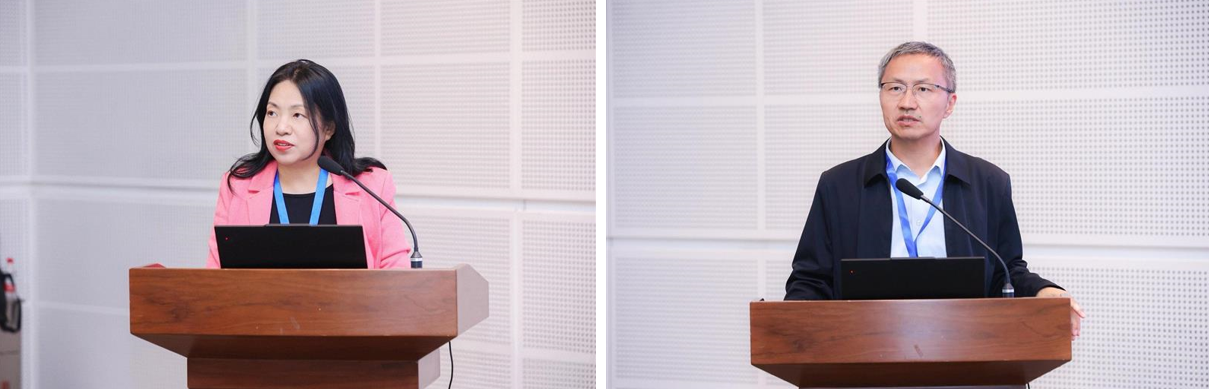
Building on a decade of regional collaboration on integrated straw management, which was initiated following the request of member States at an earlier edition of the Regional Forum, the event took stock of CSAM's role in advancing climate-smart agricultural mechanization and sustainable crop residue management through regional cooperation, pilot activities and knowledge exchange. Participants shared national experiences, emerging technologies and policy approaches for reducing the open burning of crop residues while promoting productive uses of agricultural biomass that can improve soil health, lower greenhouse gas emissions and generate additional income opportunities for farmers.
Discussions throughout the event underscored the importance of expanding inclusive access to mechanization services, strengthening public-private partnerships and creating enabling policy environments for wider adoption of sustainable crop residue management practices. Participants also exchanged views on regional responses to crop residue burning, including development projects involving the World Bank and the International Rice Research Institute (IRRI), the implementation of the ASEAN Guidelines on the Reduction of Crop Residue Burning, innovative technologies for residue utilization, and mechanisms for improving access to machinery and custom hiring services for smallholder farmers.
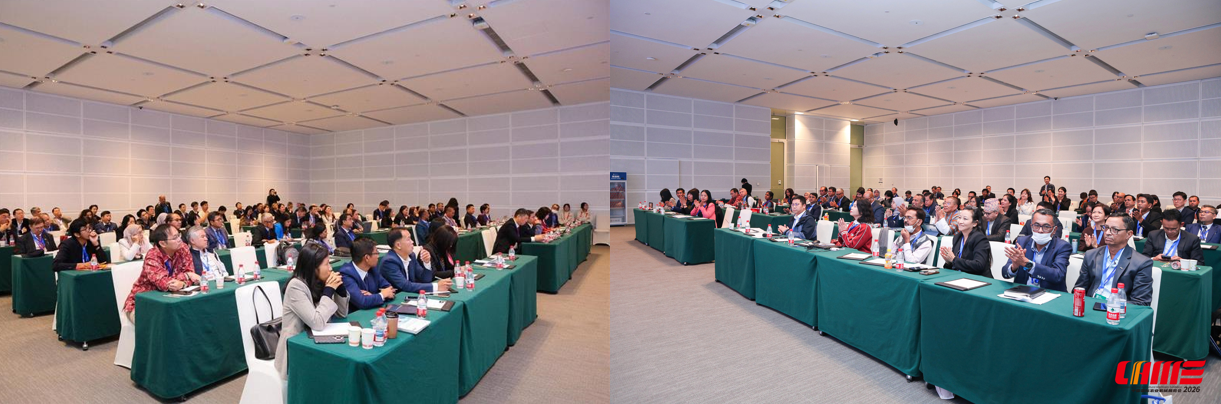
Held alongside the China International Agricultural Machinery Exhibition (CIAME) 2026, the event enabled participants to connect policy discussions with practical exposure to agricultural machinery, private-sector innovations and emerging technology trends showcased at the exhibition. The participants were also engaged in a field trip to visit an agricultural machinery manufacturing site, working on applying innovative technologies into agricultural equipment.
As new partnerships were discussed and interest in CSAM's Integrated Straw Management initiative continue to expand, the regional dialogue is likely to be translated into practical cooperation and joint action in the following years. By bringing together governments, research institutions, farmers' organizations, development partners and the private sector, the event helped advance shared efforts towards more sustainable, resilient and inclusive agrifood systems across Asia and the Pacific.