Agricultural Machinery Custom Hiring Business Training Advances Climate-Smart Crop Residue Management in Nepal
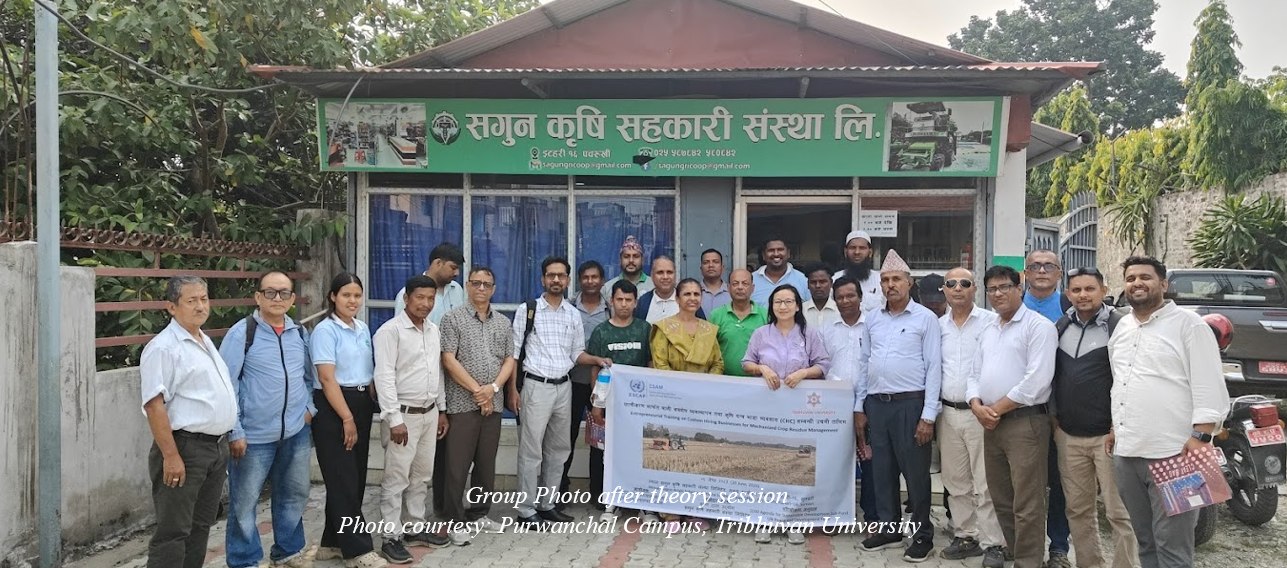
On 20 May 2026, the Centre for Sustainable Agricultural Mechanization (CSAM) of the United Nations Economic and Social Commission for Asia and the Pacific (ESCAP), together with the Department of Agricultural Engineering, Institute of Engineering, Purwanchal Campus, Tribhuvan University convened a one-day training programme on agricultural machinery custom hiring businesses to strengthen mechanization-based solutions for climate-smart crop residue management in Nepal’s eastern Terai.
The opening session was co-chaired by Prof. Jawed Alam, Associate Professor and Principal Investigator, together with Mr. Kamal Kanta Rai, president of Sagun Agriculture Cooperative Society Limited (SACSL), highlighting the collaboration between academic institutions and local cooperatives in advancing sustainable mechanization practices.
The training brought together 19 participants from Jhapa, Morang, and Sunsari districts, including representatives of cooperatives and NGOs operating or aspiring to establish custom hiring centers (CHCs) for agricultural machinery. The programme aimed to empower entrepreneurs to adopt mechanized solutions that reduce open burning, improve soil health, and create sustainable business opportunities.
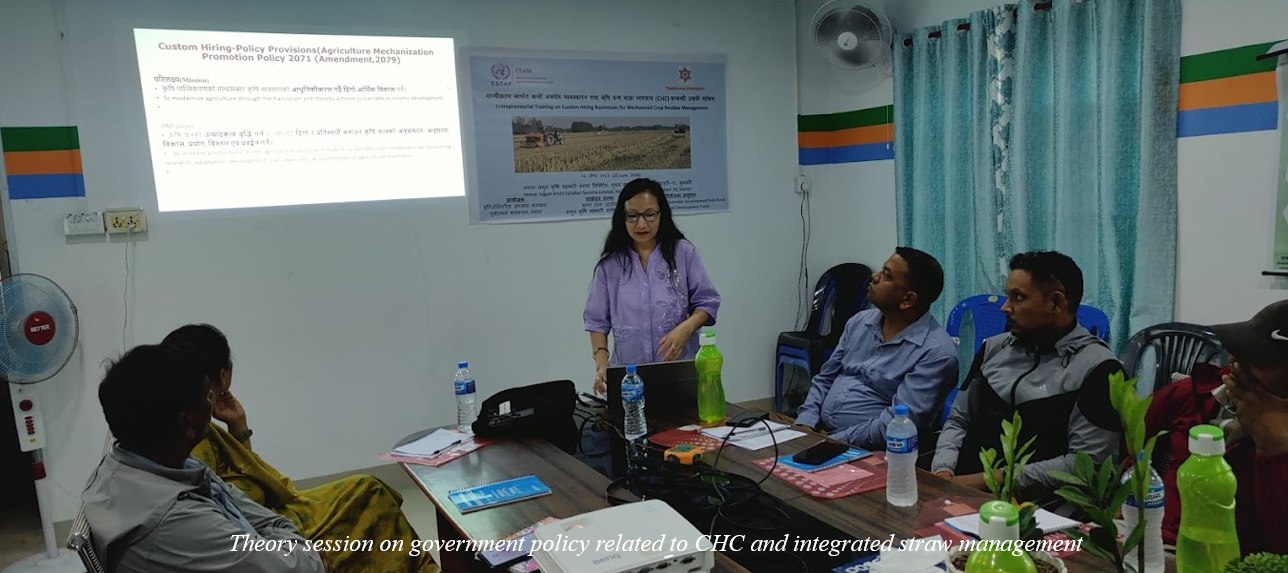
Training sessions highlighted government policies and subsidies, success stories of in-situ and ex-situ straw management, and best practices from across Asia. Participants gained hands-on exposure to specialized machinery such as the super seeders, mulchers, and balers, and learned how CHCs can be managed as profitable, sustainable entities.
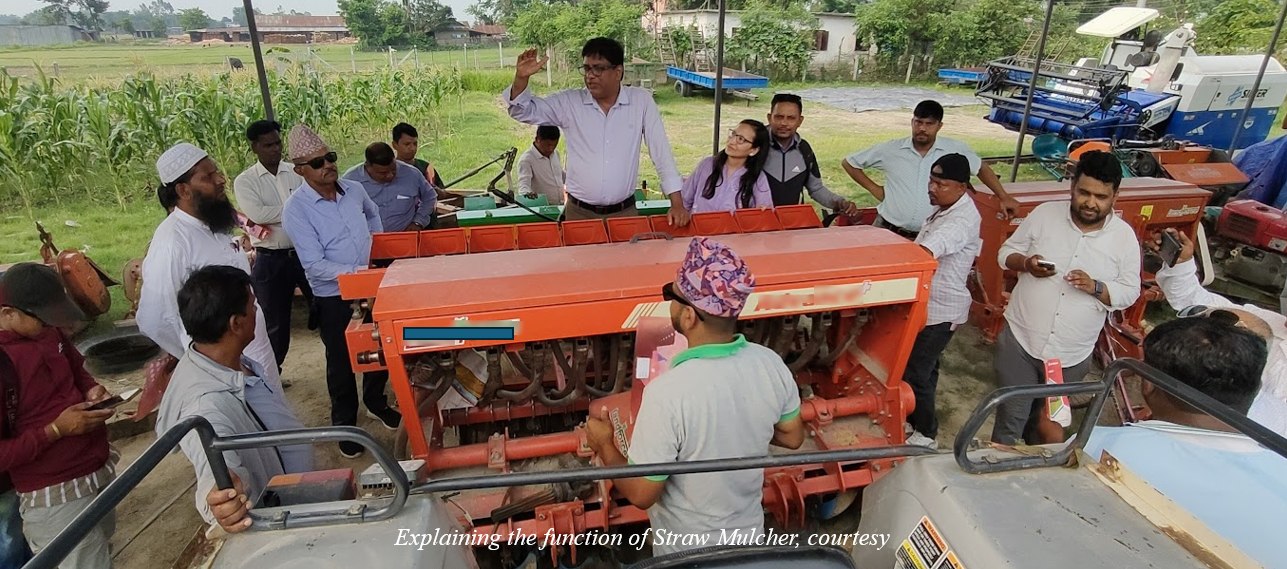
Participants emphasized the value of the training and recommended extending its duration, expanding outreach to village-level stakeholders, and strengthening government support for agricultural mechanization services. The event is part of CSAM’s ongoing United Nations Peace and Development Fund-supported project, Strengthening Mechanization-based Solutions for Climate-smart Crop Residue Management in Cambodia, Indonesia, and Nepal.